The full analysis
Product details
What's actually in Veluflex, and what it claims
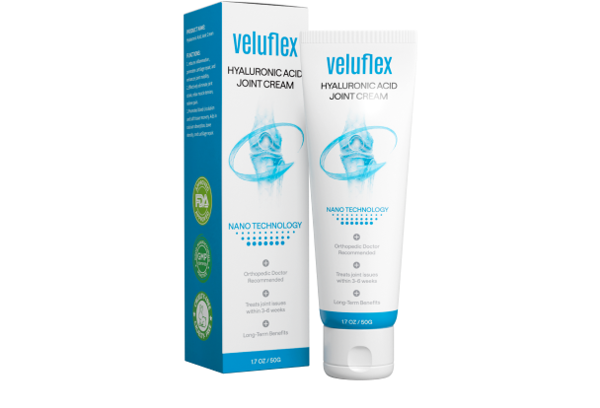
The label lists hyaluronic acid, vitamin E (tocopherol acetate), allantoin, a horse fat lipid complex, chamomile extract, and a carrier system of glycerin, mineral oil and caprylic triglyceride. Plus, per the manufacturer, "seven additional synergistic compounds" not individually named. The marketing claims include "95% pain-free in 7 days," relief within 15 minutes, penetration through "seven skin layers," and "340% better absorption" than standard creams.
Worth being direct about: those specific percentages and timeframes are the manufacturer's own marketing figures, not results from an independent clinical trial we could find. We're particularly sceptical of the "cartilage restoration" framing. Published skin-penetration research confirms standard hyaluronic acid is too large a molecule to meaningfully cross the skin barrier; only specially engineered low-molecular-weight fragments can, and those aren't what's typically used in a cosmetic cream base. A more realistic expectation for a topical cream like this is mild, temporary comfort from ingredients like chamomile and vitamin E, which do have some real anti-inflammatory and soothing properties on skin. Not tissue regeneration.
Who should be careful with this formula
Chamomile is part of the same plant family as ragweed and daisies, so anyone with those allergies could react to it on skin. Patch-test on a small area first. Avoid applying to broken or irritated skin. If joint pain is persistent, worsening, or affecting daily function, see a doctor to rule out an underlying condition rather than relying on a cream alone.
Frequently asked questions
What's actually in Veluflex?
The label lists hyaluronic acid, vitamin E (tocopherol acetate), allantoin, a horse fat lipid complex, chamomile extract, and a carrier system of glycerin, mineral oil and caprylic triglyceride, plus several other unnamed compounds.
Does Veluflex really relieve joint pain in 7 days?
That figure, like "95% pain-free in 7 days" and "340% better absorption," comes from the manufacturer's own marketing, not an independent clinical trial. Some ingredients (chamomile, vitamin E) have mild topical anti-inflammatory or soothing properties, which could plausibly bring some comfort, but a specific week-by-week recovery percentage isn't something we could verify.
Can a cream really "restore cartilage"?
This is the claim we're most sceptical of. Hyaluronic acid molecules are generally too large to penetrate skin in a way that would meaningfully reach and rebuild joint cartilage. Topical products are much more plausible as surface moisturisers or mild anti-inflammatories than as tissue-regenerating treatments.
Are there any side effects?
Chamomile is in the same plant family as ragweed and daisies, so people with those allergies could react to it on skin. Test on a small area first, avoid broken skin, and see a doctor if joint pain is persistent or worsening rather than relying on a cream alone.
How much does Veluflex cost?
On the manufacturer's site, pricing is currently shown as roughly €54.90 for a 30-day supply (1 tube), €79.95 for 60 days (2 tubes), and €109.95 for 90 days (3 tubes, their bestseller), with a 30-day money-back guarantee. Prices, currency and promotions can change and may differ by country, so always check the official page for the current figure.
Where can I check current pricing and buy it?
Through the official page. That's exactly where our link takes you, so you see today's real price, bundle options and guarantee terms firsthand, instead of a number that might already be outdated.